Dreams in which you witness something mortal: what your life is to do with what you have seen
“To witness in a dream is a particular position. The psyche shows you that something in your reality you have already seen, but have not yet worked through.”
Dreams in which you become a witness to a mortal or extreme event are not about “a bad sign.” They are most often about the state of your inner sight: you have seen a great deal, and not all of it have you managed to digest. The psyche returns you to the position of observer so that you may notice: in your life, or in your immediate field, there are scenes that have left a heavy trace, not yet worked through. Such dreams may also speak of a feeling of powerlessness — of seeing another’s misfortune and being able to do nothing. They ask not for interpretation, but for gentleness with yourself.
Such dreams come in moments when your psyche reminds you: the theme of witnessing lives in you; notice it, and give it space, even when it is uncomfortable.
Perhaps, right now as you read these lines, you have already recalled one heavy dream in which you watched and could do nothing — and there is a reason it returns to you.
You are an unwilling witness to a heavy event
You dream that you find yourself near something terrible without meaning to: you walk down the street and see; you enter a room and come upon it; you pass by and end up in the middle of it. You are not a participant; you simply saw. A numb stillness and a heavy trace rise in the body: I saw this, and it is in me.
Your Shadow is caught on this image — the part that keeps everything you saw, and everything that was not processed. Such a dream often comes when there are real scenes in your life you could not digest: another’s misfortune, cruelty seen by accident, an event in which you were a witness no one needed. The Shadow shows: this experience has not disappeared; it lives in you, even if you have long “forgotten” it.
If the scene is specific, you have a real memory. Work with it gently, perhaps with a specialist, rather than alone. If it is blurred, you have a general “heavy archive.” Give it space; do not demand of yourself to pass through it faster. If you feel a witness’s guilt — “I could have done more” — this is a frequent and very painful theme. Make this distinction: back then, what was possible for you was what was possible, not what now seems possible from warmth and safety. If, for the first time, you acknowledge “this has stayed with me,” this is a first step toward release. Support it with a conversation with someone who can hear. In a brighter setting, the same role of bearing witness is what makes you the one of whom they say you are a witness or in a special role.
Ask yourself: “What heavy scenes of my life did I unwillingly witness — and do I give them a real place within, or pretend that they have ‘passed’?”
Today, if this theme is alive, give ten minutes of silence to this memory. Without trying to “work it through”; simply acknowledge that it happened, and that it is in you. If necessary, seek a specialist’s support. The Shadow recognizes such acknowledgments as consent to be heard, and in the dreams that follow handles heavy scenes more gently.
Astrological note: A dream of unwilling witnessing often comes during tense transits of Pluto through your 8th or 12th house, during its aspects to Mercury, and in periods when Saturn touches your Mercury. Scorpios, Geminis, and Capricorns recognize this dream with particular accuracy. If Pluto is now touching your Mercury — the Shadow turns to the heavy archive, and the dream conveys this through a scene in which you see what you did not want to see.
You try to intervene, help, stop
You dream that you are a witness — and take a step: you shout, you run, you try to help. Sometimes you manage in time, sometimes not. An active composure and an anxiety rise in the body together: I am trying — will I manage?
Your Warrior surges into this anxiety — the part that will not leave another’s misfortune without response, and knows that being merely a witness is not enough. The Warrior comes when you have shown, or want to show, a civic, human stance: to protect the one being harmed; to stand up for the weak; not to stay neutral in a situation where neutrality is itself a choice. The Warrior shows: you are not indifferent; this matters.
If you managed to help, you have a real strength of participation. Value it, and support it in waking life. If you did not manage, this is not your fault — you took a step, which is already more than most. If it is frightening, fear does not cancel your right to act; often real deeds are done from fear. If someone near you supports your intervention, you have allies. Notice them. The opposite stance toward the same scene is filming with the camera — the hands that wanted to help kept busy holding a lens instead.
Ask yourself: “Where in my life right now do I want to or should intervene in someone else’s situation — and what stops me: real danger or the old ‘don’t butt in, no one asked you’?”
Today, in one situation where you see someone’s difficulty, take one step of human response: a short message, an offer of help, a referral to a resource. The Warrior recognizes such steps as consent to participation, and in the dreams that follow more often gives you scenes in which your action has meaning.
Astrological note: A dream of an attempt to intervene often comes during harmonious transits of Mars through your 11th or 9th house, during its conjunction with Jupiter, and in periods of Mars in Aries. Aries, Sagittarians, and Aquarians recognize this dream with particular accuracy. If Mars is now touching your Jupiter — the Warrior steps into response, and the dream conveys this through a scene in which your participation can change the course of events.
You are paralyzed, cannot react
You dream that you can see, and cannot move; you shout — no voice; you want to help — your legs will not go. A total powerlessness. A familiar old freeze rises in the body: I cannot.
In this terror, your Guardian turns to stone — the part that knows that sometimes paralysis is the only possible reaction, and that the blame for it is not yours. This dream comes when you have lived through moments of real powerlessness in waking life: you were too small to change things; you were too helpless; you were not in a position to act. The Guardian shows: this freeze is not weakness; it was a form of defense — without it, you yourself might have suffered.
If the paralysis is partial, you still have access to movement. Gently return it to the body, through breath and simple movement. If it is total, the theme is a serious history. Seek professional support; this will not “pass on its own,” and it does not require willpower.
If, in the dream, you can suddenly make one small gesture, this is a great inner step. Remember it as an experience of movement where there was freezing before. If someone helps you thaw, there is support in your waking life. Accept it; do not apologize for weakness.
Ask yourself: “Where in my biography was I a powerless witness — and can I now, as an adult, give that former self the acknowledgment and protection that was not there then?”
Today, if the theme resonates, inwardly speak to that witnessing self: “I see you; you could not then; I am beside you now.” Without the demand to “work it through.” The Guardian recognizes such words as a recognition of the old freeze, and in the dreams that follow handles scenes of powerlessness more gently.
Astrological note: A dream of a witness’s paralysis often comes during tense transits of Pluto through the 1st or 8th house, during its aspects to Saturn, and in periods when Saturn touches your Mars. Scorpios, Capricorns, and Aries recognize this dream with particular accuracy. If Pluto is now touching your Saturn — the Guardian shows the freeze, and the dream conveys this through a body that again cannot move at the moment when it would need to act.
After what you saw
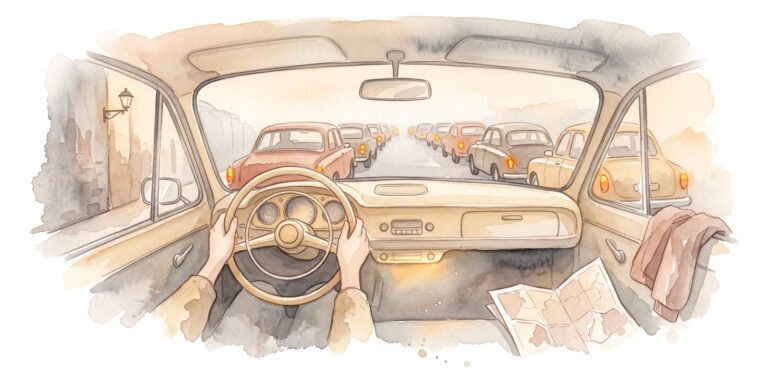
You dream that you are no longer inside the scene; you are somewhere after. You walk, you sit, someone brings water; inside there is silence and a surprising calm: I saw, and I am alive.
Your Inner Sage forges this memory anew — the part that can be with a heavy experience and not fall apart. The dream comes when you have done real work with what you saw: spoken it, sought help, given the memory space, refused to hide it. The Sage shows: you have not “forgotten”; you have integrated. This is a very important form of work.
If the silence after the scene is calm, you have a real maturity in handling the heavy. Acknowledge it. If care is nearby, in waking life you have resources thanks to which you are managing. Protect them. If you can speak of what was seen, you have an inner language for this — and that is a rare gift. If, for the first time, you do not weep at the memory, this is not having “gone cold”; this is having lived through it. What often follows in the dream is the image of an office empty at night — the place where the day kept happening, now silent.
Ask yourself: “What heavy experience of my life have I managed to integrate — and do I allow myself to acknowledge this integration as my work, not ‘it just passed’?”
Today, write down one heavy event you can now speak about without losing yourself, and beside it, what helped you get there. The Inner Sage recognizes such notes as respect for your work, and in the dreams that follow more often gives you “after” scenes in which silence gathers rather than scatters.
Astrological note: A dream of “after what was seen” often comes during harmonious transits of Jupiter through your 8th or 12th house, during its conjunction with Saturn or Pluto, and in periods when Chiron emerges from a long transit. Sagittarians, Scorpios, and Pisces recognize this dream with particular accuracy. If Jupiter is now touching your Pluto — the Inner Sage receives integration, and the dream conveys this through a silence that gathers what was into a coherent whole.
Witnessing the heavy in a dream is a serious symbol. Through it the psyche reminds you that there are scenes in your life worth noticing and giving space to, instead of pretending they are not there. Not to forget — but to honestly acknowledge that they were in you, that they still are, and that you carry them.
Let yourself relate to these dreams gently. Acknowledge your archive of heavy witnessing. Support your response where you can intervene, and do not force yourself where you cannot. Forgive yourself for the moments of paralysis. Value your own work of integration when it happens.
Each time such a scene appears in a dream, some very honest part of you is quietly saying: I know what you saw; I remember it with you; and I am beside you while you learn to carry it without it destroying you.