Dreams of performing on a stage: when those in you who have long been unheard finally speak
“On a stage in a dream we become as visible as we are willing to see ourselves.”
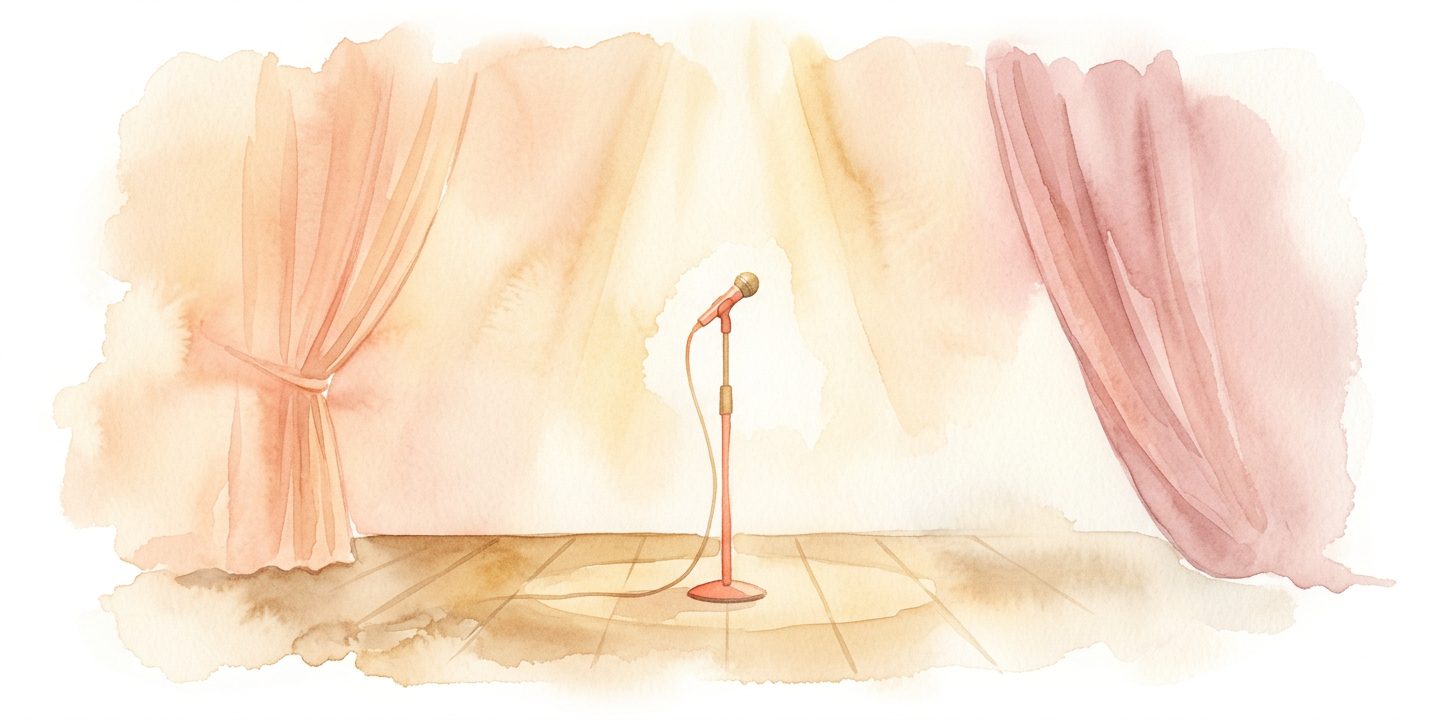
The stage is an ancient symbol of openness and risk. In early theaters, standing before people meant not a role but vulnerability: you are seen, you are heard, you are judged. That ancient memory lives in the body: in a dream, stepping onto a stage, you feel the stir at once — the heart beats differently, breath comes uneven, the voice looks for footing. And it is always about more than a concrete hall: about how you meet the theme of “being seen” and “being heard.”
In a dream, a stage appears when something has gathered inside that asks to be made visible in the world: a voice, a creative idea, an honest position, a side of your personality that has long lived quietly. The psyche checks whether you are ready to step out with it to others, or not yet. And at the same time it shows which inner figures accompany you in that moment: the one who wants to speak; the one who makes you stay silent; the one who rejoices when it is finally heard.
The stir in one such dream was not fear but a sign that something alive has ripened in you — something whose time has come to step into the light. Perhaps it is waiting for the first step now too.
You speak on stage and the words come
You step onto the stage, and with the first step something soft happens: the stir does not leave, but it becomes workable. You open your mouth, and the words arrange themselves in the right order. The voice sounds steadier than usual. The body takes up more space than in waking life: the shoulders open, the chest rises, the gaze naturally gathers the hall. There is a sense that you are being heard — and that hearing does not interfere but helps: it gathers you into one whole.
Your Creator sounds on this stage: the part that knows how to turn the inner into a form accessible to others. By day it often lacks room: too many tasks, too little silence, too short intervals between things. It lives in you, but rarely gets a stage — real or symbolic. When that stage appears in a dream, the Creator finally steps out. It does not want fame; it wants something simple: to be made present, spoken, done. And the dream shows how clear your voice becomes when it is given room.
If the words in the dream form into coherent speech, in life your own tone is ripening now, and it is worth hearing first without checking with anyone. If you speak without a rehearsed text and still clearly, a part of you already knows you have something to share, even unprepared. If the audience in the hall is attentive and quiet, the Creator feels received, and this is a signal: the environment in your life knows how to hold your voice now, and that is a resource. In its inverted form, the same theme returns as you cannot speak or are not heard — the silent reverse of finding your tone.
Ask yourself: “What inner theme, idea, or feeling has now ripened in me enough that it asks to be said aloud — and where in my life is there at least a small stage for it?”
Today, say aloud one sentence you usually keep inside: at home, in the car, on a walk. Let it be something important to you. Not for someone — for yourself. The Creator recognizes such voicings as stepping onto the stage, and in later dreams pushes the hall to the background less often, more often bringing a voice that knows what to say.
Astrological note: The dream in which you confidently speak from a stage often arrives during harmonious transits of Jupiter or the Sun through the 5th or 1st house, during their aspects to Mercury, and during periods of active Sun in Leo or Aries. Leos, Aries, and Sagittarians recognize this dream especially precisely. If Jupiter is now touching your Mercury — the Creator is ready to come forward, and the dream shows this as easy, living speech.
You forget your text, everything stops
You begin the performance steadily, but at some point your head goes empty. The next word does not come. The next line has evaporated. You stand and are silent for a second, another, a third that feels eternal. The face fills with heat, the palms go cold, the heart beats as if trying to run. Your eyes slide across the faces in the hall, and the longer the silence lasts, the heavier it feels to break it with any sound.
Your Inner Critic presses in this pause: the part that is fastest at turning an ordinary slip into proof of your inadequacy. In the scene of the forgotten text it works in its favorite manner: amplifying each second of silence tenfold, filling it with inner words of “you did not prepare well,” “everyone is watching,” “you are disgracing yourself.” The dream shows how easily the Inner Critic can stop the flow. By day it does the same thing in other forms: in an awkward pause in a conversation, in the moment when the answer did not come at once, in a situation calling for a quick decision.
If at some point in the dream you do remember the text, the Inner Critic has frightened you deeply, but deep down you know the flow will return if it stops being tugged at. If you go on standing silently and the dream cuts off, the psyche is showing how firm the Inner Critic’s grip can be, and how much strength goes into resisting its voice. If someone in the hall quietly prompts you with the first word, a part of you already knows there are people in life able to support you in an awkward moment, and they are worth noticing in waking life.
Ask yourself: “In what situations in my life does a pause or a small hitch turn inside me into enormous shame — and what will happen if I allow myself sometimes simply to be silent, proving nothing?”
Today, in a conversation where you usually rush to fill the silence, make one conscious pause of a few seconds. Do not justify it, do not explain. Simply hold it. The Inner Critic recognizes such pauses as your right to silence, and in later dreams stops the words in the middle of the stage less often.
Astrological note: The dream in which the text is forgotten in the middle of the stage often arrives during transits of Saturn through the 3rd or 5th house, during its tense aspects to Mercury, and during periods of retrograde Mercury in earth signs. Virgos, Capricorns, and Geminis recognize this dream especially precisely. If Saturn is now touching your Mercury — the Inner Critic is increasing the pressure on speech, and the dream shows this as a lapse in the middle of a performance.
The audience sits silently, not responding
You speak, you play, you sing. Everything goes as it should. But in the hall there is silence of a different quality. Not the kind that holds its breath in attention, but the kind where they seem not to hear at all. Faces do not respond, the eyes either stare at nothing or are turned aside, no one smiles, no one frowns. Between you and them, as if a pane of glass. You continue by inertia, but a cold bewilderment slowly grows inside: am I nothing to them?
Your Shadow shows itself before this hall: the part of you that you once pushed out of your life, everything that was inconvenient, frightening, “not yours.” In this scene the Shadow shows something old: the fear of being invisible, the experience of being displayed and not looked at, of speaking and not being heard. This often goes back to early years: an adult nodded without lifting their eyes; you brought joy or pain and a stock phrase came in reply. The dream returns that experience and shows: it still lives in the body and comes out as the stage of a silent hall.
If at some moment one face appears in the hall that does respond, the Shadow shows that in life even one attentive gaze heals much, and such a gaze is worth seeking directly. If the silence of the hall feels like a punishment, a part of you still carries the old wound “I was not noticed,” and it deserves to be heard as real. If after the dream you wake with a faint anger, this is a healthy sign: the one who has long been unseen has a right to be angry, and anger here is strength, not a defect.
Ask yourself: “Whose attention do I still carry in my life as an inner emptiness, as if I never got enough of it — and who among the living people near me today is able to give me even a small share of that attention for real?”
Today, choose one person in whose attention you are sure, and allow yourself to stay near them for three to five minutes in living contact: look them in the eye, listen, respond. Not in order to “get attention,” but to remind yourself it exists. The Shadow recognizes such meetings as confirmation of your existence, and in later dreams places a cold hall before you less often.
Astrological note: The dream of a silent hall often arrives during transits of Saturn or Pluto through the 7th or 11th house, during their tense aspects to the Moon, and during periods of active Saturn in air signs. Aquarians, Libras, and Capricorns recognize this dream especially precisely. If Saturn is now touching your Moon — the Shadow is returning the old wound “I am not seen,” and the dream shows this as a hall in which no one responds.
The hall applauds, you stand and listen
The performance has ended. The moment comes when the hall answers. First separate claps, then they merge into a steady dense sound, then the shouts come. People stand up. Someone smiles at you, someone nods. You stand, and the first movement is not pride, but a strange confusion: is all this — for me? The body at first does not know where to put this wave. Then it begins to accept it: warmth rises in the chest, the shoulders straighten, and you want either to cry or to laugh.
Your Inner Child comes alive under this applause: the part that knows best what it means to be accepted. Not judged, not “earned,” but accepted — simply for being, and for having made something out of yourself. In life it often does not get this meeting: the adult world judges quickly, criticizes quickly, and rarely stops simply to applaud. In the dream of applause, the Inner Child gets what it often lacks — a response from the world that does not require proof.
If in the dream you blush but do not run off the stage, a part of you is already learning to accept warmth from others; this is a skill, and it is trainable. If you feel the impulse to bow, the body knows the ancient way to say “thank you, I see your response,” and that gesture is worth remembering. If you stand and cannot move because your throat tightens from something bright and strong, the Inner Child has received its share of recognition, and this is not weakness, this is a meeting. When the sound grows past welcome, the dream turns into the one of ovations that frighten by their force.
Ask yourself: “When was the last time I truly allowed myself to accept that I am seen and valued — and what will change if today I let myself stop for a minute at someone’s warm word instead of waving it off at once?”
Today, if someone says something good to you — a thank you, a compliment, a word of gratitude — linger for a second and receive it into the body before waving it away or turning the conversation. The Inner Child recognizes such acceptance as its lawful share, and in later dreams more often brings you onto a stage where the hall rises.
Astrological note: The dream of applause often arrives during harmonious transits of Jupiter or Venus through the 5th or 10th house, during their aspects to the Sun, and during periods of active Sun in Leo. Leos, Libras, and Sagittarians recognize this dream especially precisely. If Jupiter is now touching your Sun — the Inner Child is learning to receive recognition, and the dream shows this as a warm wave from the hall.
The dream of performing on a stage is not about a real hall and not about others’ judgments. It is the psyche’s way of showing which inner figures accompany you when something in you asks to be made visible: a Creator that has found a voice, an Inner Critic stopping the flow, a Shadow carrying the old wound of invisibility, or an Inner Child accepting a response for the first time.
A voice that has once in a dream sounded without apology stays in the body as an example. And it is from such inner examples that what later becomes a recognizable voice in waking life is usually made: not loud, not perfect, but yours.